Back to blog
Strategy
9 min read

When a Tree Lands on the House: What Restoration Call Answering Has to Do First

Jacob Korniak

Jacob Korniak

Co-Founder, CRO

August 21, 2026
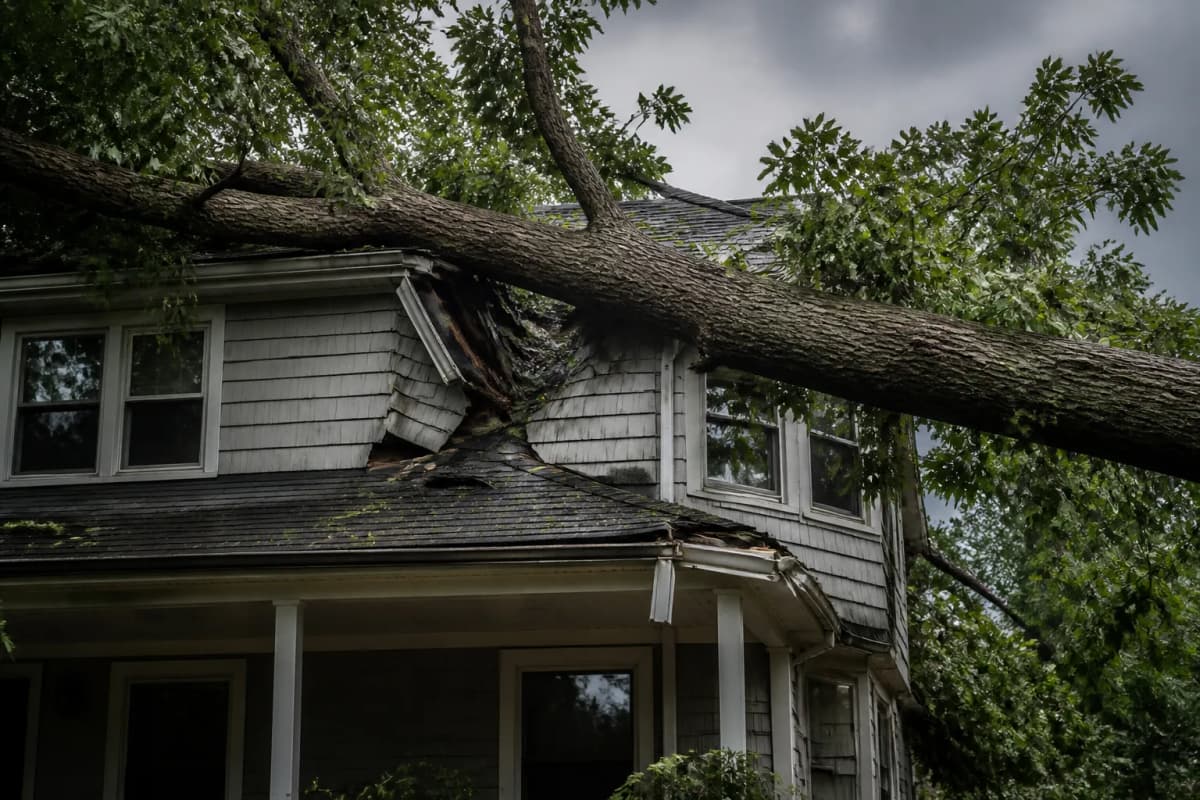
A large fallen tree resting on a two-story house roof after a storm, broken shingles and a hanging gutter, overcast sky, no people or logos.

The tree is on the house.

Your line has two minutes.

Owners looking for call answering for a restoration company are usually shopping pickup. I want you to shop the first two minutes of a real loss instead.

A tree on the house. Not a drip. Not a tub. A trunk on the roof, shingles open, maybe a bedroom ceiling coming down. The homeowner is in the yard on the phone. They called you because they think you board up and dry houses.

If your answering setup cannot run that call, it is not restoration call answering. It is a receptionist with your logo.

I have sat with owners who were proud of pickup and still losing these. The tree is on the house. The next company is already on the way. Your office wrote a callback.

I am Jacob. I am going to stay on the tree the whole way. You can see how we set this up at https://www.dialhank.com.

Stay on this one loss: the tree on the roof

The storm has passed or it is still gusting. A tree is on the roof. The gutter is hanging. There may be a hole. There may be power lines in the branches. There may be people still inside.

They do not want Thursday at 10. They want to know if anyone should get out, if you board up, and when a crew is coming.

A generic answering service hears "tree" and writes "storm damage, call back." You cannot dispatch from that. You also cannot tell board-up from mitigation from "call the power company first."

Stay on this one. If you jump to generic water talk, you will write a script that fails the next trunk too.

What that call actually sounds like

I am keeping this on the trunk on purpose. Generic storm talk is how these posts get sloppy.

What they say first

"A tree is on my house. Can you come?" That is the whole brief. They are scared. They are wet. They may still have kids in the house. If your pickup cannot tell this from a leaky valley, you will send the wrong truck or no truck.

What you have to tell apart

Is anyone in the house. Is the tree on a power line. Is the roof open. Is water coming in. Board-up tonight, dry-out, or both. Address. That is a restoration file, not a landscaping lead. You are not the tree service. You are the people who make the house safe and dry once the scene is clear.

What a generic pickup writes down

Name. Number. "Tree on roof." Callback. No safety. No open roof. No rooms. You cannot load a board-up trailer from that note. Your on-call then has to call them back, and by then they have already called the next restoration company.

What restoration call answering has to be

When owners ask me what restoration call answering should do, I do not start with a brand. I start with the tree.

Pickup is the easy part. The first two minutes have to sort safety, board-up, and water. Then they have to reach the people who actually roll, not a general appointment booker.

A lot of shops now want emergencies to ring a group at once. Mitigation manager and the on-call, together. Sequential ringing feels slow when a trunk is on the ridge. One cell that is already on another loss is how this dies in voicemail.

Construction is not mitigation. If your tree call lands on a remodel estimator, you wasted the only minute the homeowner was going to give you. I hear this mix-up more than you would think. The office treats every inbound as a future rebuild. The tree does not wait for a rebuild conversation.

Call answering for restoration has to know that split. Board-up and dry-out tonight. Rebuild later, if there is a rebuild.

The first two minutes

If you are shopping call answering for a restoration company, use this list. Not a feature page. The tree.

  • Confirm people are out from under it. If wires are down, they need the utility, not a restoration speech.
  • Ask if the roof is open and if water is coming in. That is board-up plus mitigation, or just a tarp later.
  • Get the address before you promise a time. A cross street helps when GPS is messy after a storm.
  • Ring the emergency group, not one cell that is already on another loss.
  • Do not book a construction estimate for a tree that is still on the house.
  • Write board-up versus dry-out in the file so the next person is not guessing.
  • Leave a recording. When someone says you promised 30 minutes, you want the tape.
  • If they ask about tree removal, be honest. You may not cut the tree. You still have to protect the opening once it is safe.

Board-up is not the same as dry-out

Board-up and dry-out are not the same truck. On a tree, you often need both, but not always.

If the roof is open and rain is still coming, you need to close the hole. If a bedroom ceiling is wet, you need air and extraction too. If the tree is on the house but the shingles held, you may be looking at a different job than you thought.

Your call answering has to ask enough to send the right mix. A board-up crew that shows up to a closed roof and a wet closet is a bad start. A dry-out crew that shows up to an open hole and no tarp is worse.

This is why generic "storm damage" in the note is useless. Storm is the weather. The job is the opening, the water, and whether people are still in the house.

How I define it

I judge restoration call answering with one test. Could your lead tech leave the shop from that note?

On the tree, that means they know people are out. They know if the roof is open. They know if water is in a room. They have an address. They know it is board-up, not a kitchen remodel.

If they have to call the homeowner back to learn that, you do not have call answering for restoration. You have a delay.

Minute billing and off-script small talk both fail this test. The operator is paid to hang up. You are paid to get the right trailer moving.

I have watched shops blame the storm for missed jobs. The storm is not the problem. The file is the problem. The tree is still on the house. The note says callback. That is on you, not on the weather.

How I set this up with owners

When I walk this at https://www.dialhank.com, I start with the trunk, not a feature list.

Hank answers as your company. On a tree-on-the-house call it should ask the safety questions, then try your emergency people as a group if that is how you run on-call. Then it should leave a file, not a hope.

You can keep humans first. Overflow exists so the tree does not hit voicemail while two techs are already on other losses. That is the pattern I keep seeing. The office is good from 8 to 5. After hours, one cell. The second tree of the night goes to voicemail.

I am not going to pretend every shop should fire the office. Plenty of you have a coordinator who is great on weekdays. The tree does not care about weekdays.

If your overflow cannot tell board-up from a kitchen remodel, do not bother. You just paid for a slower callback.

A note on later paperwork, without the legal stuff

I am not your attorney. I will not quote claim rules or name programs.

If this later needs a timestamp, a sticky note that says "tree" is a weak story. The recording and the job record are how you explain when you started.

A lot of these start as cash. The homeowner called because a tree is on the house. They are not shopping a rebuild yet. They want someone tonight. If your coverage takes a message, they call the next restoration company while it is still on the roof.

That is the whole point of restoration call answering. Hold the job long enough for your people to roll. Do not turn a live emergency into a morning callback list.

A simple audit you can run after the next storm

Pull last storm's after-hours. Find the ones that were a tree, a limb, or "something on the roof."

How many asked if people were out?

How many asked about open roof versus water in the rooms?

How many rang more than one person at once?

How many have a file a tech could leave with?

If most of those are thin, you do not have restoration call answering. You have a greeting. The tree is just the one that is easy to see.

Do this with your ops person, not with marketing. Listen to the tape. Read the note. Ask if you would roll from it. If the answer is no, fix the first two minutes before you buy more ads.

Questions restoration owners ask me about call answering

What should restoration call answering actually do?

Run the first two minutes of a real loss. On a tree on the house that means safety, open roof, water, address, and the emergency crew. A name and a callback is not call answering. It is a message.

How is a tree-on-the-house call different from a roof leak?

A leak is water. A tree is structure, safety, board-up, and maybe water. If your script treats them the same, you will send the dry-out truck to a trunk and lose the homeowner. Ask about the opening first, then the rooms.

Should emergencies ring one on-call cell or a group?

A lot of owners now want a group. One cell is already on another loss. Simultaneous ringing gets a human faster when a tree is on the ridge. Sequential is fine if it does not dump to voicemail. Test it on a real after-hours night, not on a demo.

What if there are power lines in the tree?

That is a utility problem first. Your pickup should not pretend a restoration truck can move a live line. Get people safe, then talk board-up when the scene is clear. I am not your attorney. I am telling you not to dispatch into wires.

Where do I start if our storm calls are a mess?

Listen to the last ten tree and limb recordings. Count how many have a dispatchable file. Then look at overflow that knows restoration, like we run at dialhank.com. Fix the first two minutes before you change anything else.

The Bottom Line

Call answering for a restoration company is not pickup. It is the first two minutes of a tree on the house.

People out. Wires. Open roof. Water. The right crew, as a group if you can, with a file that exists when they roll.

If your current service writes "storm, call back," you already know. It is fine for a dentist. It is not fine for a trunk on the ridge.

I built Hank for that call. You can see it and book time at https://www.dialhank.com. Bring a real storm recording if you have one. We will walk the tree the same way I did here.

If the answer is no, that is the work. Fix the first two minutes. Then the next trunk is a job, not a missed voicemail.

Ready to capture 100% of your restoration leads?

See how Hank's 24/7 AI phone answering can help your restoration business book every mitigation job and never miss another after-hours call.

Restoration service van arrival