Back to blog
Strategy
8 min read

When the Kitchen Supply Line Bursts: What After-Hours Restoration Answering Has to Do

Trevor Uptain

Trevor Uptain

Co-Founder, Hank

August 27, 2026
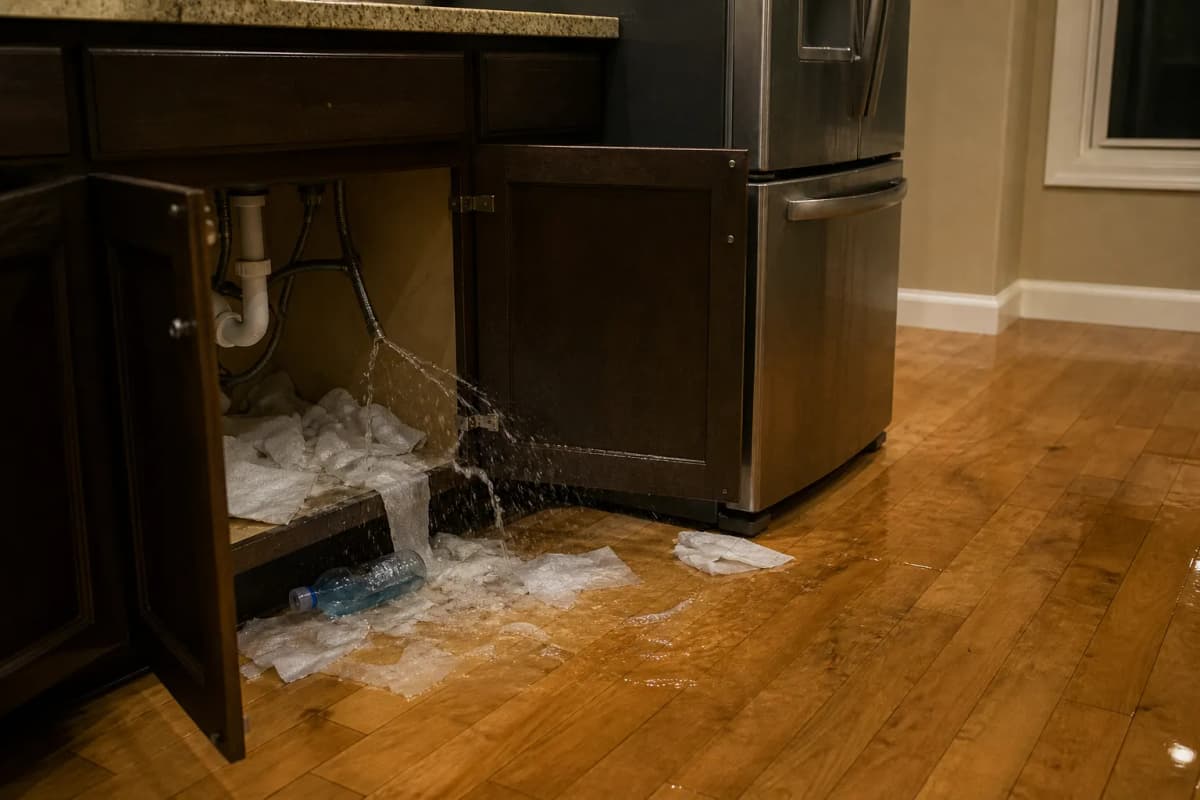
A residential kitchen after a burst sink supply line, cabinet doors open, water spraying onto hardwood, soaked paper towels on the floor, no people or logos.

The line is still open.

Your coverage has one job first.

Owners looking for after-hours answering for a restoration company are usually shopping pickup. I want you to shop whether the water gets stopped.

A kitchen sink supply line lets go. Not a drip. Not a slow wax ring. The braided line under the sink blows. Water is spraying into the cabinet and out onto the floor. The homeowner is on the phone in wet socks.

If your coverage takes a name and a callback while that line is still open, it is not after-hours answering for restoration. It is a receptionist with your logo.

I am Trevor. I am going to stay on this one line the whole way. You can see how we set this up at https://www.dialhank.com.

Stay on this one loss: the line under the sink

It is 11:20 at night. Someone pulled the sink sprayer. Or the line finally cracked behind the garbage disposal. Either way, water is coming out fast.

The cabinet is a pond. Paper towels are already useless. The hardwood is dark. If this kitchen is over a living room, the ceiling below may already be spotting.

They do not want Thursday at 10. They want the water off, and they want a crew.

A generic answering service hears "leak under the sink" and writes "plumbing, call back." You cannot dispatch from that. You also cannot tell a slow drip from a line that is still dumping 40 pounds of pressure onto the floor.

What that call actually sounds like

I am keeping this on the burst supply line on purpose. Generic leak talk is how these posts get sloppy.

What they say first

"A pipe under my sink burst. Water is everywhere. Can you come?" That is the whole brief. They may have the cabinet open. They may not know the valves are right there. If your pickup cannot tell this from a dripping P-trap, you will send the wrong truck or no truck.

What you have to tell apart

Is it still spraying. Can they see two small valves under the sink. Do they know where the house shutoff is. Which rooms are wet. Is there a living space below. That is a restoration file, not a plumber lead. You can still send them to a plumber. You cannot skip the water that is already on the floor.

What a generic pickup writes down

Name. Number. "Leak under sink." Callback. No shutoff. No rooms. No downstairs. You cannot load extractors from that note. The homeowner calls the next restoration company while the cabinet is still filling.

What after-hours restoration answering has to be

When owners ask me what after-hours answering for a restoration company should do, I do not start with a brand. I start with the line that is still open.

Pickup is the easy part. The first two minutes have to stop the water, or confirm it is already off. Then they have to name the rooms. Then they have to reach the people who roll.

I keep hearing the same miss. Coverage treats every inbound like a message. The burst line does not wait for a message. Every minute it sprays is another sheet of hardwood and another stain on the ceiling below.

Call answering for restoration has to know that split. Stop the source. Then dry. Rebuild later, if there is a rebuild.

The first two minutes

If you are shopping after-hours answering for a restoration company, use this list. Not a feature page. The spray.

  • Ask if it is still spraying. If yes, the next sentence is shutoff, not scheduling.
  • Walk them to the two small valves under the sink. Hot and cold. Clockwise until they stop.
  • If those valves will not turn, or they cannot get to them, send them to the house main.
  • Get the address before you promise a time.
  • Ask which rooms are wet, and whether anyone lives under that kitchen.
  • Do not book a plumber estimate and hang up. The floor is already wet.
  • Ring the emergency people, as a group if that is how you run on-call.
  • Write "burst supply line, source on or off, rooms affected" in the file. Not "kitchen leak."
  • Leave a recording. When they say you never told them about the valve, you want the tape.

The shutoff is the job

The shutoff is the whole job in the first minute.

Under a kitchen sink you usually have two small valves, one on each line. A lot of homeowners have never turned them. They are scared they will break something. Tell them clockwise. Tell them it is okay if it takes two hands.

If the valves are stuck, or the cabinet is too full of water to reach, the house main is next. That is often in the basement, the garage, or in a meter box. Your coverage should know the usual places. It should not invent a map for a house it cannot see. Ask. Then stay on the line until the spray changes.

A washer hose blowout is a different room. A toilet overflow is a different fixture. Stay on this line. Do not let the script jump to generic water talk. The person in the kitchen needs the valves in front of them, not a speech about mitigation.

How I define a pass

I judge after-hours answering for a restoration company with one test on this call. Did the water stop before your tech left the shop?

If the note says "leak, call back" and the line is still open, you failed. The homeowner is still standing in it. Your tech will walk into a worse job than the one you were sold.

If the note says the valves are closed, the kitchen and the hall are wet, and there may be a stain downstairs, your lead can roll. That is call answering. The rest is a message.

I have watched shops blame the homeowner for not shutting the water off. A lot of people have never looked under that sink. Your coverage is the one on the phone. Help them turn it, or get a tech moving while it is still open. Do not scold them in the morning.

How I set this up with owners

When I walk this at https://www.dialhank.com, I start with the spray, not a feature list.

Hank answers as your company. On a burst supply line it should ask if the water is still coming, then try the under-sink valves, then the house shutoff if those will not turn. Then it should try your emergency people. Then it should leave a file.

You can keep humans first. Overflow exists so the second water loss of the night does not sit in voicemail. Overflow that cannot talk someone to a valve is just a slower callback.

I am not going to pretend every shop should fire the office. Plenty of you have a coordinator who is great from 8 to 5. The supply line does not care about 8 to 5.

A note on later paperwork, without the legal stuff

I am not your attorney. I will not quote claim rules.

If this later needs a timestamp, "kitchen leak" is a weak story for a floor that was wet for two hours after you answered. The recording and the job record are how you explain when the source stopped and when you started.

A lot of these start as cash. The homeowner called because water is spraying. They are not shopping a rebuild. If your coverage takes a message, they call the next restoration company while the cabinet is still filling.

A simple audit you can run this week

Pull last month's after-hours. Find the under-sink calls. Burst line. "Something blew under the kitchen sink." "Water is shooting out."

How many asked if it was still spraying?

How many walked them to the valves?

How many asked about the room below the kitchen?

How many have a file a tech could leave with?

If most of those are "leak, callback," you do not have after-hours answering for a restoration company. You have a greeting. The supply line is just the one that is easy to see.

Do this with ops, not marketing. Listen to the tape. Read the note. Ask if you would roll from it. If the answer is no, fix the shutoff step before you buy more ads.

Questions restoration owners ask me about after-hours water calls

What should after-hours answering for a restoration company do first on a burst line?

Ask if it is still spraying. Then walk them to the under-sink valves, or the house main if those will not turn. A name and a callback while the line is open is not answering. It is a delay.

How is a burst supply line different from a washer hose blowout?

Same idea, different room. A washer hose is in the laundry. A sink supply line is under a kitchen or bath cabinet, often over a living space. Ask about the room below. Do not run the laundry script on a kitchen sink.

What if they cannot find the shutoff?

Stay on the line. Ask about the basement, the garage, or a meter box. If they still cannot turn it, get a tech moving and keep them off the wet floor if you can. Do not hang up and hope.

Should we send a plumber instead of mitigation?

You can send both. The plumber deals with the line. You deal with the water that is already on the floor and in the cabinet. Do not treat a soaked kitchen as a plumber-only lead.

Where do I start if our under-sink calls are a mess?

Listen to the last ten. Count how many asked if the water was still on. Then look at overflow that knows restoration, like we run at dialhank.com. Fix the shutoff step before you change anything else.

The Bottom Line

After-hours answering for a restoration company is not pickup. It is the first two minutes of a supply line that is still open.

Water off. Rooms named. The right crew, with a file that exists when they roll.

If your current service writes "kitchen leak, call back," you already know. It is fine for a dentist. It is not fine for a cabinet that is filling up.

I built Hank for that call. You can see it and book time at https://www.dialhank.com. Bring a real under-sink recording if you have one. We will walk the line the same way I did here.

If the water is still on in the note, that is the work.

Ready to capture 100% of your restoration leads?

See how Hank's 24/7 AI phone answering can help your restoration business book every mitigation job and never miss another after-hours call.

Restoration service van arrival