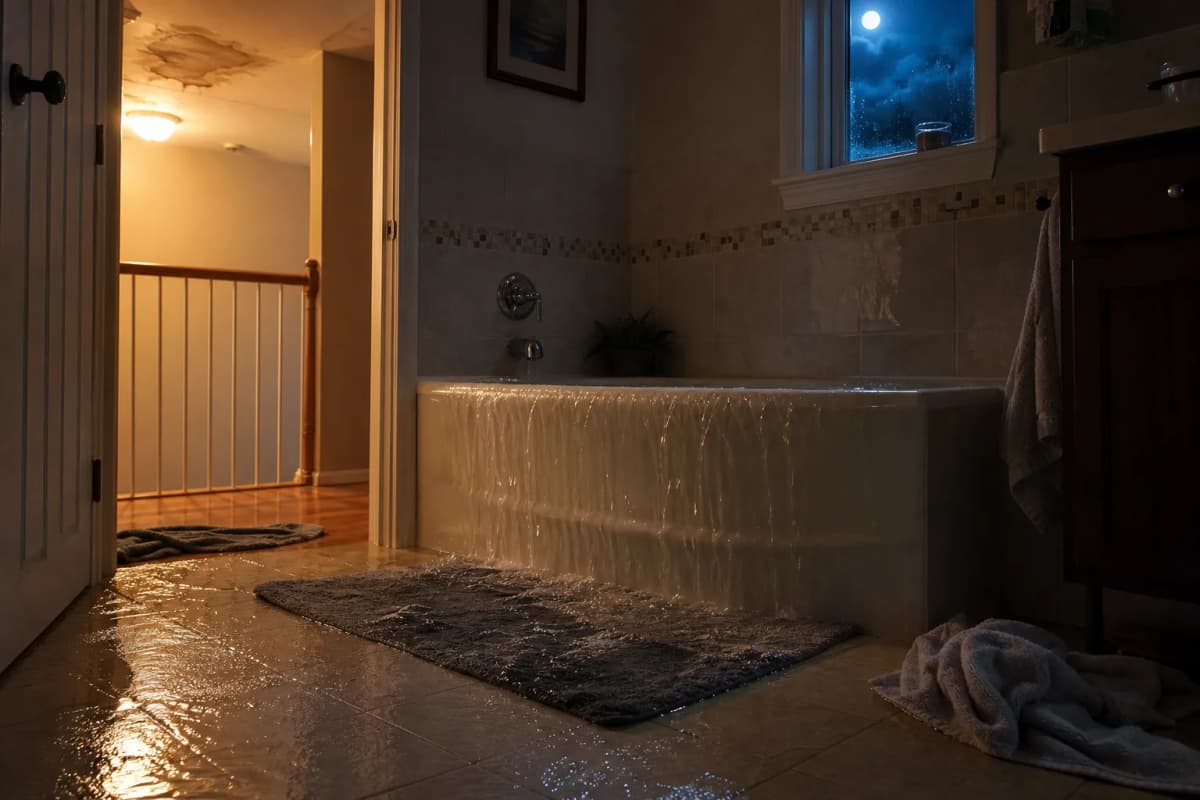
I want you to picture a specific call. Not "water damage" in the abstract. A tub overflow at 2am.
A kid left the water running. The bath mat is floating. Water is already through the ceiling in the hallway. The homeowner is standing in a puddle, on their phone, looking for someone who can come now.
They do not call three shops and wait. They call the first restoration company that looks like it answers at night. If you miss that ring, they call the next name.
I talk to restoration owners about this every week. The ones who lose that job are not bad at drying houses. They are bad at the ten minutes after the phone rings.
This is for you if you run a restoration company and your after-hours line is still a voicemail, a generic answering service, or whoever happens to be awake. I am going to walk the tub overflow all the way through, the way I would if we were sitting in your shop.
You can see how we set this up at https://www.dialhank.com.
What the homeowner does in the first ten minutes
The homeowner is not shopping. They are scared.
They search something like emergency water damage or 24 hour water restoration. They tap the first result that looks local. They want a person who will tell them what to do and when a crew is coming.
If your line rings to voicemail, most of them hang up. They do not leave a three-minute message about the tub. They try the next company.
If a live service picks up and says "someone will call you back in the morning," you already lost. Morning is when the drywall is heavier and the claim is uglier.
I have heard owners say "we get those calls on the cell." Sometimes you do. Sometimes you are on another job, asleep, or the phone is in the van. The homeowner does not care. They needed you in that minute.
Stay on this one loss: the tub
I am going to keep this on the tub overflow on purpose. Generic "water damage" talk is how posts get sloppy. The call has a shape.
What they say first
"The tub overflowed. Water is coming through the ceiling. Can you come tonight?" That is the whole brief. If your intake person (or your AI) cannot tell a tub overflow from a slow supply-line drip, you will send the wrong crew or no crew.
What you actually need
Address. Which floor. Is water still running. Has the valve been shut off. Is it a second-story tub over a living room. Any standing water. Kids or elderly in the house. Are they calling their insurance tonight or do they just want you there. That is a job file, not a sticky note.
What a generic pickup writes down
Name. Number. "Water leak." Callback in the morning. You cannot dispatch from that. You also cannot defend a late start if this later becomes a program job.
Why this call is the whole business
I am not going to name carriers or walk through claim law. That is not the point, and I am not your attorney.
The point is simpler. After-hours water calls are how a lot of your real work starts. A tub overflow at 2am is one of the cleanest examples because it is common, it is urgent, and it is easy to botch on the phone.
If you miss it, two things happen. The homeowner calls your competitor. And the water keeps moving while you sleep.
If you answer but take a bad note, you show up late, understaffed, or to the wrong story of the house. The homeowner already decided you were the company. You talked them out of it with a sloppy intake.
Owners ask me what the best phone answering setup is for emergency restoration. I do not start with a brand. I start with the tub.
What a real after-hours pickup has to do
If you are comparing answering options for a restoration company, use this list. Not a feature page. The tub.
- Pick up on the first ring at 2am, Saturday, and Christmas. If you cannot do that, you do not have after-hours coverage. You have a hope.
- Stay on the line. Do not bounce them to a hold queue that sounds like a bank.
- Ask if the water is still running and if they can shut the valve. That one question changes the job.
- Get the address and which room before you promise a time.
- Tell a tub overflow from a burst supply line, a toilet overflow, and a weather leak. Those are different trucks and different urgency.
- If you have an on-call tech, transfer or text them with the file. Do not make the homeowner repeat the story at 2:20am.
- Write the job into the system you actually run (your restoration CRM), not a notepad that dies at sunrise.
- Leave a recording. When the homeowner says you promised 45 minutes, you want the tape.
Pickup is not the job
A lot of shops buy an answering service and feel done. The phone gets picked up. That is the demo.
Then a real tub overflow hits. The operator does not know what a water stop is. They do not ask which floor. They cannot tell your on-call from your office manager. You get an email at 7:12am that says "customer had a leak last night."
That is not an emergency restoration answering service. That is a message service wearing your name.
I tell owners to judge the pickup by one test. Could your lead tech leave the house from that note, or do they have to call the homeowner back and start over?
If they have to start over, you do not have coverage. You have a delay with a greeting.
How I set this up with owners
When I walk this at https://www.dialhank.com, I do not start with a feature list. I start with the call.
Hank answers as your company. On a tub overflow it should ask the same things your best coordinator would ask. Water still running. Valve. Floor. Standing water. Anyone who needs to get out of the room. Then it should open the job and get it to the person who can roll a truck.
You can still try your team first. If they are on another loss, asleep, or the second line is already lit, the AI stays on the call. The homeowner never hears voicemail.
I am not going to pretend every shop should fire their office. Plenty of you have a great coordinator from 8 to 5. The tub does not care about 8 to 5.
The shops that keep the 2am jobs are the ones whose after-hours line can build a file, not just a callback.
A note on programs, without the legal stuff
You do not need a legal lecture to see why this matters on program work. If you are on a panel, someone is already timing how fast you answered and how fast you arrived.
I will not quote scorecard rules here. Those change, and they are between you and the program.
What I will say: a missed tub overflow is not only a lost cash job. It is a late start you may have to explain later. The recording and the timestamp are how you explain it.
If your after-hours process is "we will call them at 7," you are choosing to start late. That is a business decision. Just do not call it 24/7 coverage.
A simple audit you can run this week
Walk your last ten after-hours water calls. Not a survey. The actual recordings, if you have them.
How many were a tub, a toilet, a supply line, or "water, I guess"?
How many have an address you could dispatch from without a callback?
How many got a truck the same night?
How many are a name and a number on a pad?
That list will tell you more than any sales deck. If most of those ten are thin notes, your after-hours line is leaking jobs. The tub overflow is just the one that is easiest to see.
Questions restoration owners ask me about after-hours answering
What is the best phone answering service for emergency restoration?
The one that can run a water call at 2am the way your coordinator would at 2pm. Pickup is the easy part. The best setup for emergency restoration asks if the water is still running, gets the address and the room, and gets a truck moving. A generic receptionist who takes a name and a promise to call back is not that.
Do restoration companies need 24/7 call answering?
If you take emergency water, fire, or storm work, yes. The tub overflow does not wait for office hours. You can staff it with people, with a restoration-specific AI, or with both. What you cannot do is let those calls hit voicemail and still claim you are a 24-hour shop.
What should an answering service ask on a tub overflow?
Is the water still on. Can they shut the valve. Which floor and which rooms are wet. Is there standing water. Is anyone in the home who needs help getting out of the room. Do they want a crew tonight. Then take the address and a callback number and put it in your system.
Is an AI receptionist enough for a restoration company?
It is enough if it knows restoration. A generic AI receptionist will pick up and still miss the job, the same way a generic live service does. I would rather you have a trained after-hours process than a clever voice that cannot tell a tub overflow from a leaky faucet.
Where do I start if our after-hours line is a mess?
Pull last week's night and weekend water calls. Listen to them. Count how many have a dispatchable file. Then decide whether your people, a restoration answering setup, or something like Hank at dialhank.com should own the overflow. Do not buy a tool before you know where the jobs are dying.
The Bottom Line
A tub overflow at 2am is a simple job that gets lost in a simple way. The homeowner calls. Nobody who knows restoration is on the line. They call the next shop.
If you run a restoration company, that is your market. You. The person who is supposed to stop the water and dry the house.
I built Hank for that call. You can see the product and book time with us at https://www.dialhank.com.
Bring a real after-hours recording if you have one. We will walk it the same way I walked the tub in this post. What got asked. What got written down. Whether a tech could have left the house.
If the answer is no, that is the work. Not a new logo on the van.


